
Beyond Care: The Heart of Support for Johanne
FR
For several years, we have been in contact with Johanne. She has received support through food parcels, infant formula, and currently through medical assistance. Like every beneficiary, she is also in contact with a member of the association who has shared her story.
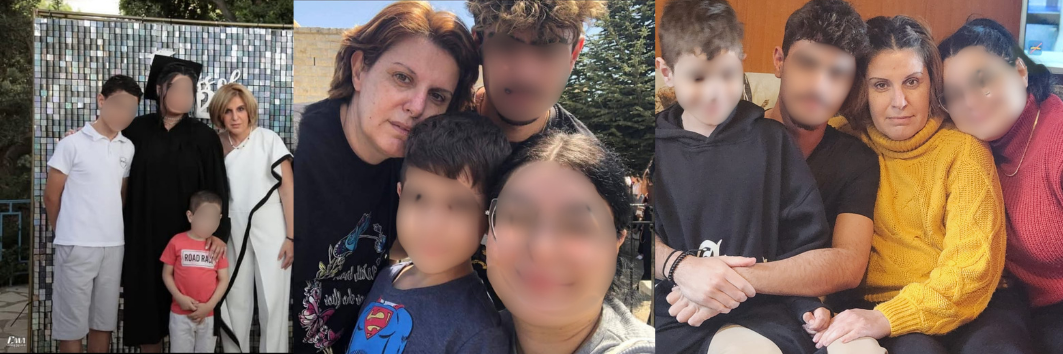
In a context of extreme vulnerability, Johanne’s story emerges as a testimony of resilience, but above all as an example of how vital it is to have support that goes beyond mere financial assistance. Johanne is fighting a very difficult battle against cancer, a disease that requires constant examinations and continuous use of medication. Her suffering, however, is not only physical: she was abandoned by her husband precisely because of her illness, leaving her alone to raise three children aged 15, 12, and 6. As if this were not enough, her youngest child, only 6 years old, has recently been diagnosed with stomach cancer.
In this situation of poverty and loneliness, medical support becomes a fundamental pillar, yet the facts show that at the heart of the project there is not only money, but also human connection.
A closeness that becomes concrete action
Widad ensures the monthly delivery of financial support, but does not stop there. Indeed, this is not a cold disbursement of funds, but a constant presence. Here are some concrete actions that define this bond: Widad maintains a “good relationship” with Johanne, regularly checking in on her and asking about her health and that of her children.
Knowing Johanne’s children well, Widad has long been committed to bringing them gifts every Christmas, a gesture aimed at preserving a small sense of serenity for the youngest despite the pain experienced at home.
Beyond medication, the support has also taken concrete form through the delivery of food parcels some years ago.
The importance of feeling loved
For Johanne, who lives in poverty and faces illness in solitude, the value of the help she receives is immense precisely because it is accompanied by care and affection.
It is this emotional closeness that gives a different meaning to medical assistance. Knowing she is not alone, having someone who “does everything possible” to support her, transforms assistance into a form of companionship in life. Ultimately, Johanne’s experience teaches us that, although medicines and examinations are essential for survival, it is human warmth and the consistency of a helping hand that restore dignity and hope to those who have been hurt by life and abandonment.
The role carried out by Widad is, for her, a way to feel close to people in difficulty. She is always eager to continue her work and to be an instrument of compassion and presence. Her commitment is a source of deep human connection, born from feeling the suffering of others as her own and doing everything possible to ease it, even if only a little.